New Doors · Grimsby
Commercial Rolling Door Repair
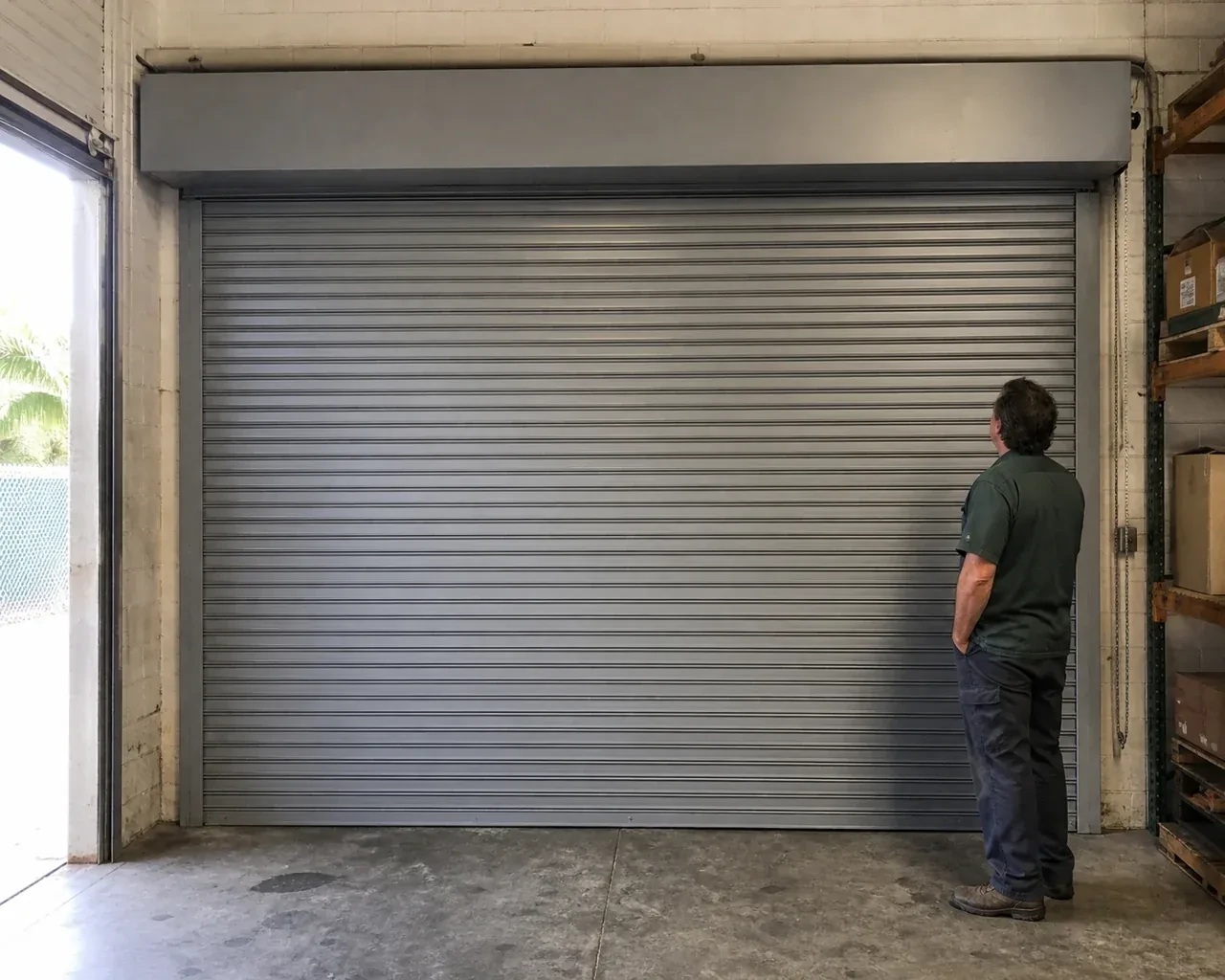
The rolling door starts upward, then one side rises ahead of the other. Its bottom bar sits on an angle, several slats scrape the guide, and the opening is no longer clear enough for normal shipping traffic.
Commercial Rolling Door Repair
In plain words
Impact damage often looks local but changes the path of the entire curtain. A bowed bottom bar can spread a guide, a bent slat can pull endlocks sideways, and a struck jamb can alter the opening width. Repair begins with measurements at the guides and brackets as well as a close look at the damaged section. Serviceable slats or curtain sections can be renewed, guides realigned and fasteners restored using components that match the identified assembly. The final check watches the repaired area enter the coil, pass through both guides and meet the sill evenly.
How the visit goesThe wall control asks the door to close, but the operator hums and stops. The curtain remains overhead while the control light and the photoelectric sensors suggest that the powered system needs a connected diagnosis.
Grimsby
How the visit goes
Read the curtain from bottom to coil
The curtain reveals how the door has been travelling. The bottom bar is checked for level, twist, impact marks and even contact with the sill. Moving upward, the inspection follows interlocking slats or sheet material, endlocks and windlocks for dents, separation, missing fasteners, polished rub marks or sideways shift. At the hood, the technician observes how the material enters the coil and whether it stacks evenly on the barrel. These clues show whether a damaged section can be renewed locally or whether distortion has spread far enough to affect guides, brackets and counterbalance.
Realign guides and attachments
Bent or shifted guides are corrected from measured reference points rather than by forcing the curtain through them. The technician establishes the required gap, plumb and parallel relationship, then straightens or replaces authorised guide components and restores loose wall-angle or bracket fasteners. Bellmouths are shaped to receive the curtain cleanly, and guide stops are secured. If damaged masonry, steel framing or a moved jamb prevents reliable attachment, that condition is separated for the appropriate building work. Once the supports are sound, the curtain is centred and moved gradually to confirm even clearance on both sides.
Manual operation that staff understand
A repaired hand-chain or emergency-hoist system comes with a simple operating walkthrough. Staff learn where the chain is stored, which direction opens or closes, how the keeper is used and how the powered operator changes over to manual mode for that particular assembly. They are also shown the normal effort and stopping behaviour, useful reference points if balance or a bearing changes later. The chain stays gathered and clear of traffic after use. Facility procedures can name the people authorised to operate it, keeping manual movement deliberate during a power interruption or control-service event.
Commercial Rolling Door Repair
In the van
- Roller chain and sprockets
- Bottom bar and astragal
- Photoelectric sensors
- Curtain slats and endlocks
- Operator brake and limits
What affects the quote
Same fees day, night or weekend
1Testing and documentation
Normal cycles, manual operation, protective responses, fire-door procedures and facility records vary by assembly. The proposal can name the demonstrations, measurements and written results included at handover.
2Traffic-control requirements
Loading schedules, pedestrian routes, lift-truck lanes and access to both faces determine how the work zone is maintained. Facility support and alternate routing form part of the service plan.
3Extent of curtain damage
One serviceable slat differs from a distorted group that has pulled endlocks sideways or damaged the coil. Material, profile, finish and number of affected curtain pieces guide the scope.
Commercial Rolling Door Repair: questions
Why is the bottom bar rising crooked?
An angled bottom bar can point to a shifted curtain, damaged slats, unequal guide friction, a moved barrel, impact at one guide or a counterbalance issue. Measurements at the sill, guides and brackets help separate those causes. Cycling is kept controlled because repeated powered movement can pull a minor tracking problem farther sideways.
What makes a rolling door different from a sectional overhead door?
A rolling door uses interlocking slats or a flexible sheet that coils around a barrel above the opening. A sectional door uses hinged panels that travel along horizontal or vertical tracks. Their guides, counterbalance arrangements, clearances and repair parts differ, so identifying the construction before service is an important first step.
Does a forklift strike always require a new curtain?
The decision follows measurements and the spread of damage. A localised group of serviceable slats, endlocks or a bottom bar may support component replacement, while extensive distortion can affect the coil, guides, brackets and reliable alignment. The jamb and anchors are checked too, since a straight-looking curtain can still bind in an opening moved by impact.
Installation & Upgrades
- Insulated Steel Garage Door InstallationYou want windows for natural light without turning the garage into a cold glass wall.
- Wind-Rated Garage Door ReplacementYour renovation drawings call for a garage door with a stated design pressure, yet the existing…
- Carriage-House Garage Door InstallationYour garage door works, yet its broad plain panels feel disconnected from the brick, gables and…
Commercial Rolling Door Repair near you
For properties in Grimsby we service the door, the hardware that lifts it and the opener that drives it, and we install new doors and openers when the old ones are done. Residential and commercial work are both covered, each with its own parts, tools and approach.