Springs · West Lincoln
Garage Door Roller Replacement in West Lincoln
Halfway up, the door hesitates and the opener strains before it carries on. Pulled by hand with the opener released, you feel the same catch at the same height, as if a wheel is dragging instead of turning.
Garage Door Roller Replacement
In plain words
Rollers are often changed as part of a wider tune-up rather than on their own. They wear at about the pace of the hinges, and a door that needed new springs has usually worn its rollers along the way, which is why many technicians suggest a fresh set whenever springs are replaced. Doing them together means the door is secured and the opener disconnected once, the hardware is tightened in a single pass, and everything that touches the track is new at the same time. If your door is already booked for spring, cable or hinge work, ask about the rollers.
How the visit goesOne of the little wheels along the edge of the door has a chunk missing, another sits crooked in its hinge, and there is a fine grey dust on the floor under the track where plastic has been wearing away.
West Lincoln
How the visit goes
Track straightness and roller clearance
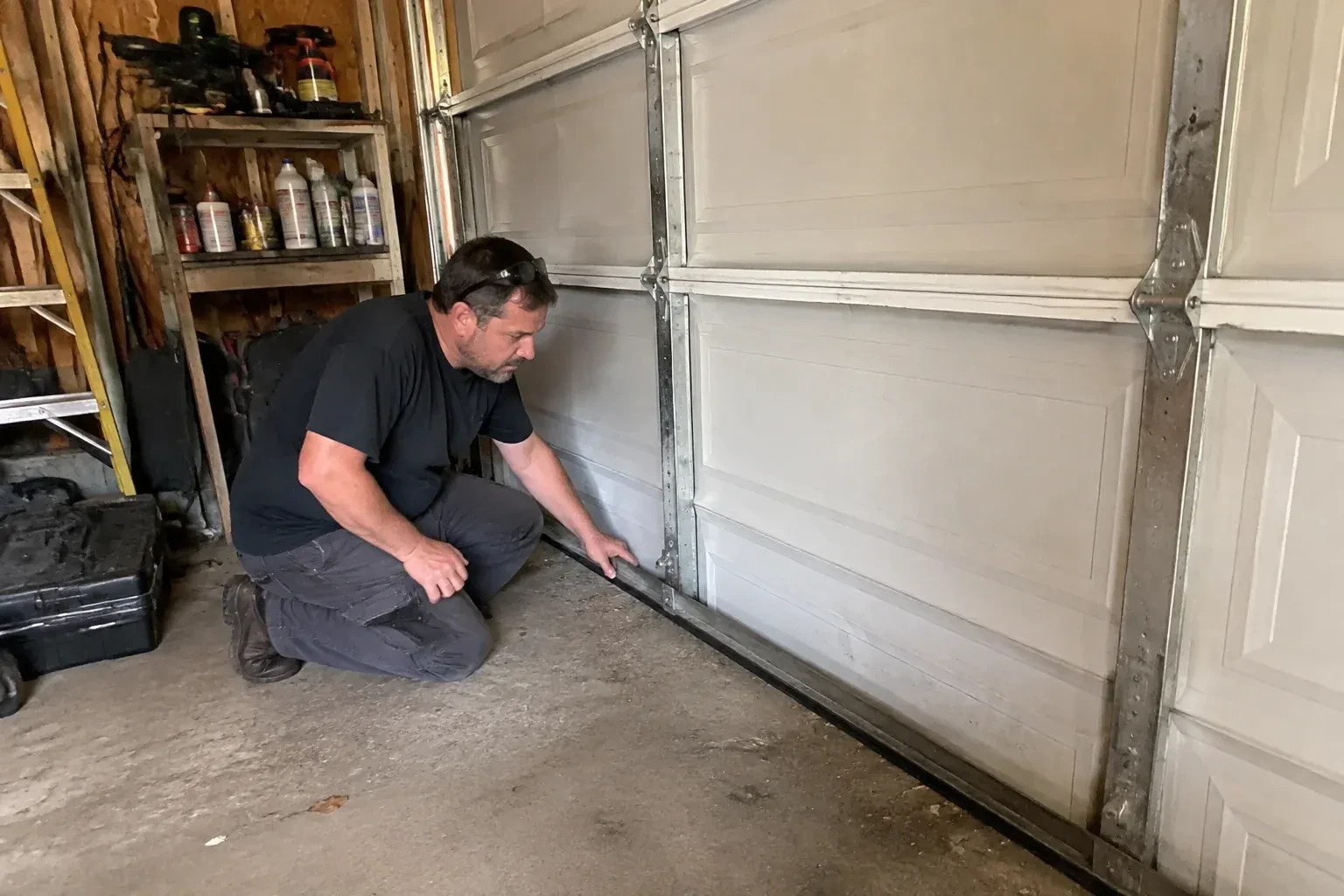
The vertical tracks are checked for plumb and the horizontal tracks for level and for sag at the rear hangers. The technician sights along each track for dents, spread or pinched edges, rust scale and the debris that collects in the bottom few inches. Clearance matters too: a wheel should turn freely with a little side play, neither squeezed by a track pulled too close to the door nor so loose that the door can lean. Where the track has drifted, the jamb brackets are adjusted before new rollers go in, because fitting fresh wheels to a crooked track simply wears them the same way the old ones went.
Fitting a matched set
The new rollers go in as one set of one type, with the same wheel material, stem length, bearing count and load rating at every position where the hinges allow it. Mixing a couple of new nylon wheels among old steel ones leaves the door running unevenly and sounding different from side to side, so even when only two wheels looked worn, the whole set is normally changed. Where a heavier door needs seven- or ten-inch stems at the double hinges, those positions get long-stem rollers and the single-hinge positions get standard ones, all from the same range so the wheels ride at the same height in the track.
A record of what was fitted
You should know what is on your door. The technician leaves you with the roller type and material, wheel size, stem length by position, bearing count and load rating, along with any hinges, fixtures or brackets replaced and any track adjustment made. Keep this with the owner's manual and the date of the last spring replacement. It answers the questions that come up later, such as which stem length to order if a single wheel is ever damaged, and it lets a future technician see at a glance what the door carries and when it went in.
Garage Door Roller Replacement
In the van
- Two-inch nylon ball-bearing rollers
- 1-1/2 inch reversal test block
- Sealed-bearing nylon rollers
- Three-inch rollers for commercial track
- Steel ball-bearing rollers
What affects the quote
Same fees day, night or weekend
1Roller type chosen
Plain steel, nylon with ten to thirteen bearings and sealed-bearing nylon sit at different points on the parts list. The technician explains what each offers for your door before you choose.
2Hinges that need replacing
Cracked, elongated or rusted hinges found during the inspection are replaced with the correct numbered hinge, each priced as its own item alongside the rollers.
3Track alignment and repair
Realigning jamb brackets, straightening a dented lip or replacing a damaged length of track is separate from the roller work and quoted as such when the inspection finds it.
Garage Door Roller Replacement: questions
What can I do before the technician arrives?
Move vehicles out of the garage and clear anything stored against the walls near the tracks so both sides are reachable from floor to ceiling. If it is safe to do so, note where in the travel the noise or hesitation happens and whether any wheel looks chipped, crooked or riding on the track edge. Have the door's make and the date of any spring work handy if you know them. Leave the door as it is; there is no need to lubricate or adjust anything first.
What lubricant is right for a garage door?
A lubricant made for garage doors, applied lightly to hinge knuckles, roller stems and the springs, following the door maker's own recommendation, since the right product and whether bearings are included varies by manufacturer. General-purpose penetrating oils are thin and wash away, and heavy grease attracts grit. Nothing goes on the track raceway or on a nylon or plastic wheel. The opener's chain or screw rail may take a lithium grease according to its manual, and the manual for your door names what its maker prefers.
What does stem length mean and why does it matter?
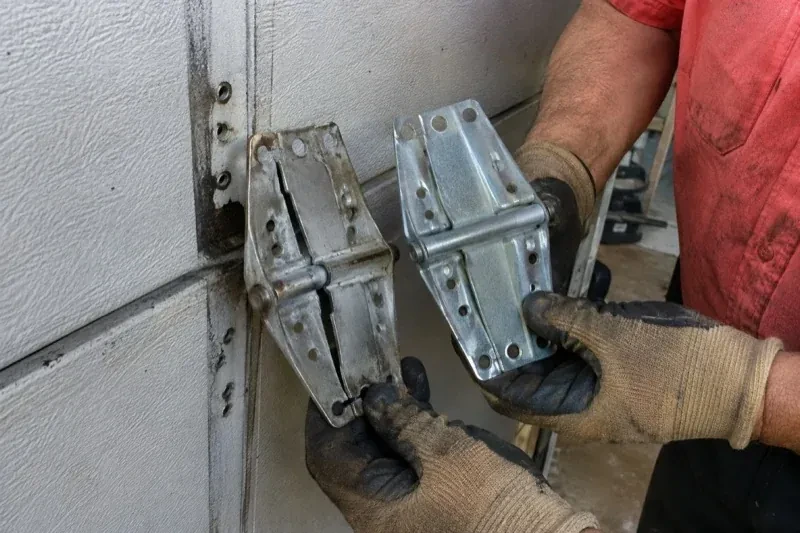
The stem is the steel shaft that passes through the hinge or fixture and carries the wheel. Most residential doors use a four-inch stem through a single hinge. Heavier doors have two hinges stacked at the ends of each section, and those need a seven- or ten-inch stem so the shaft reaches through both. A short stem in a double hinge sits loose, lets the wheel lean, and is a common reason a door leaves its track. The technician counts the hinges before choosing the set.
Springs & Hardware
Garage Door Roller Replacement near you
Broken spring, snapped cable, door off the track, opener humming but not lifting, remote lost, seal cracked, panel dented, door too loud for the bedroom above: those are the calls we take from West Lincoln, and each has its own service page explaining how we handle it.