Repairs · Nelles Estates
Garage Door Safety Inspection in Nelles Estates
It has been a hard winter. The bottom seal froze to the slab twice, the opener groaned each morning, and one afternoon you noticed a cable on the left side hanging with a little slack in it.
Garage Door Safety Inspection
In plain words
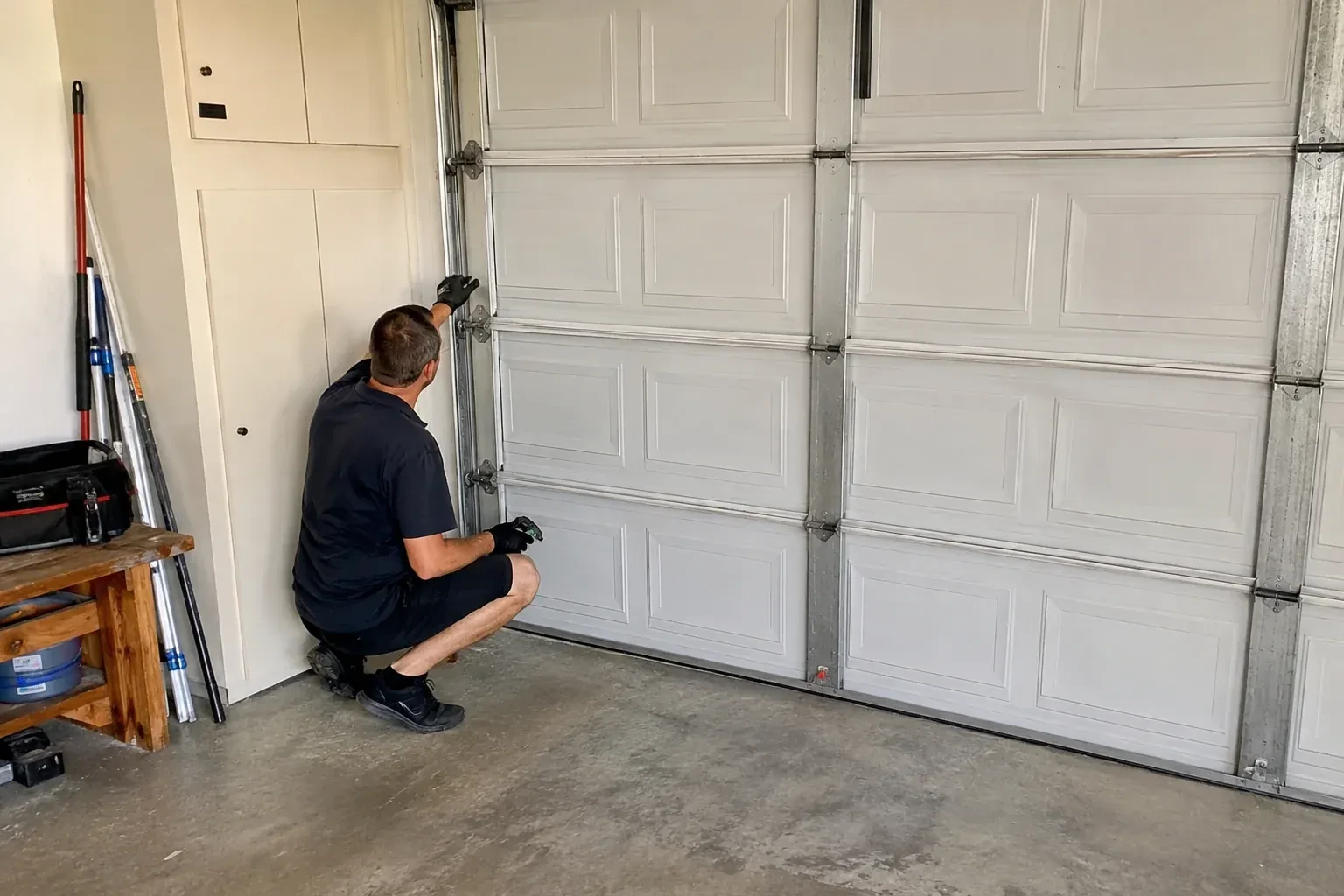
An inspection separates looking from fixing on purpose. Springs, cables, drums and bottom brackets hold the door's weight as stored tension, so the technician examines them closely, measures what can be measured and photographs what matters, without loosening or winding anything. Once the findings are written down, any adjustment or repair becomes its own planned job, done with the door secured and the stored spring tension controlled by whichever method that system calls for. This order protects the hardware as much as the people around it, and it means the report describes the door as it actually is rather than as it was left after a hurried tweak.
How the visit goesYour toddler has discovered the wall button. You want to know, from someone who checks these things for a living, that the door will stop and reverse if a small person is under it.
Nelles Estates
How the visit goes
The opener head, its arm and its safety devices
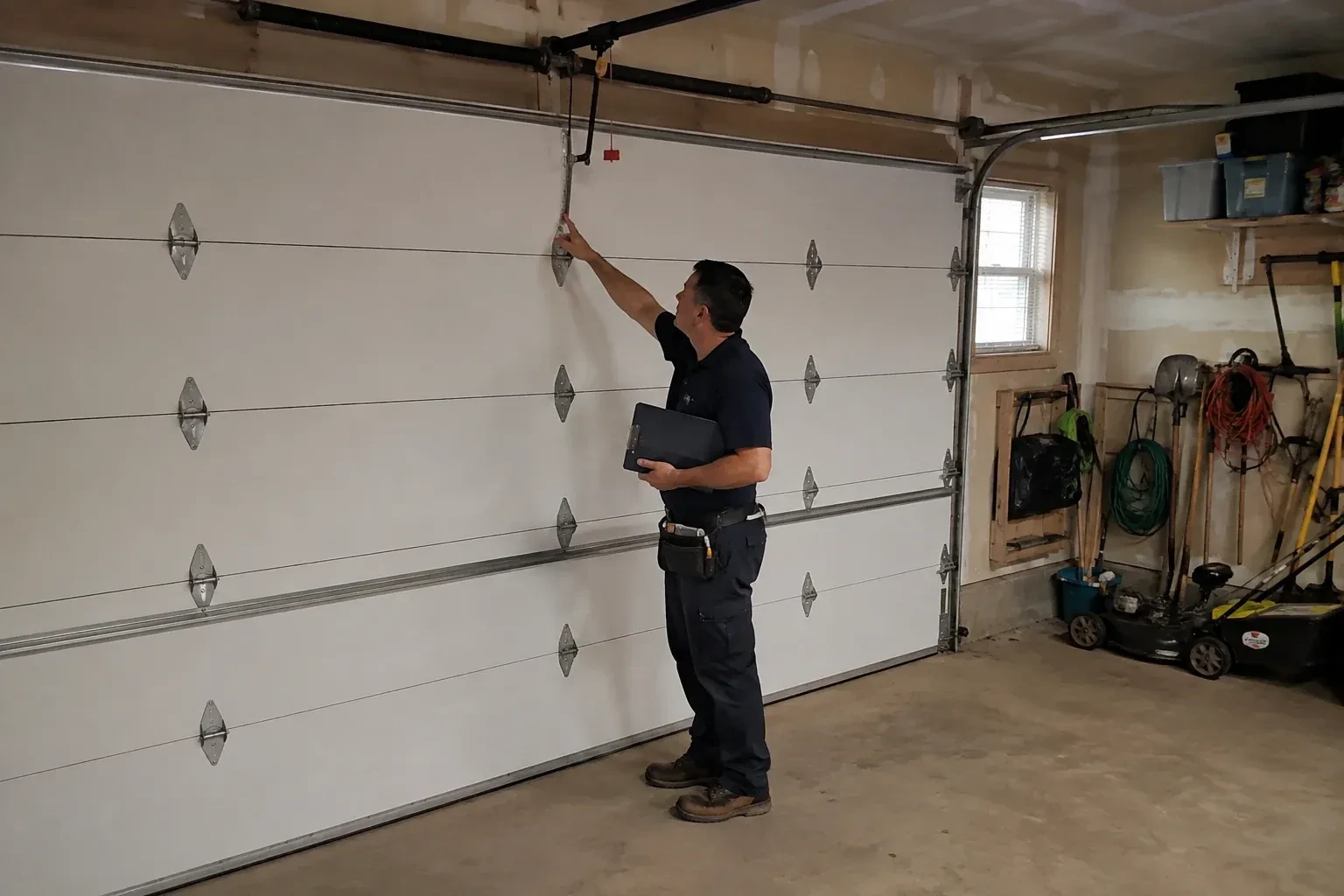
Turning to the opener, the technician checks that the motor head is secure on its hangers, the rail is straight and its header bracket firmly fixed, and the curved arm meets the door at a bracket that is bolted to a reinforced section rather than thin steel. The chain, belt or screw drive is looked at for slack or wear. The photo eyes are located, their height above the floor noted, their lenses and wiring checked, and the wall control, remotes, keypad and lock or vacation button are each identified so they can be tested in turn. This is also where the manual release cord and handle are confirmed to be within reach and in working order.
Checking the photo eyes
The photo eyes are the pair of small sensors low on each track that watch the opening with an invisible beam. The technician confirms they are mounted at the height the opener maker specifies, aligned so the indicator lights hold steady, clean of grime and frost, and wired securely. Then, with the door closing, the beam is broken with an object; the door should reverse before it reaches anything. A sensor that has been knocked out of line, wired loosely or blinded by low sun explains a great many doors that refuse to close on some afternoons, and the fix is often alignment and a wipe of the lens, done on the spot.
Keeping the opening clear and the controls sensible
A few placement decisions carry on after the visit. Bins, bikes and the snow shovel live away from the opening so the door never comes down on them and the cables never go slack. The wall control stays mounted high enough that a small child cannot reach it and where whoever presses it can see the door. Remotes are kept out of toys and glove compartments that children play in. If the household includes anyone unsteady on their feet, the manual release handle is confirmed to be reachable without a stepladder. None of this is hardware; it is simply the layout that lets the safety devices do their job.
Garage Door Safety Inspection
In the van
- Replacement hinge and track fasteners
- Lens cloth and cleaner
- Tape measure and level
- Weatherstrip samples for matching
- Work light and inspection mirror
What affects the quote
Same fees day, night or weekend
1The kind of report you need
A plain findings sheet suits most households. A photographed, measured report for a sale, a rental file or a property manager takes longer to prepare and is quoted as such.
2Findings that change the scope on the day
If a stop-use item turns up, securing the door and explaining the correction takes extra time on the visit. That, and any work you approve, is quoted separately before it starts.
3Torsion or extension counterbalance
Extension-spring doors add pulleys, cable clips and containment cables to the list, while torsion doors call for spring measurements at the shaft; the parts examined shape the time.
Garage Door Safety Inspection: questions
What happens if the report lists a stop-use item?
The door is parked in a safe position, usually closed, with the opener disconnected so nobody runs it by habit, and the reason is shown to you. The correction is explained and quoted as its own piece of work, and once it is done the door is retested through the balance, reversal and photo-eye checks before it goes back into daily service. Another door into the house or garage is used in the meantime.
My opener is old and has no photo eyes. Can it still be inspected?
Yes. Older openers rely on contact reversal alone, so the board test carries more weight and is run carefully against the maker's procedure, along with the manual balance check, the force setting and the release. The report records what the opener has and how it performed. An opener built before photo eyes became standard is flagged for replacement in the report, since makers recommend moving off that generation of opener rather than treating photo eyes as a nice-to-have.
My car bumped the door. Do I need an inspection if it still works?
A door that still runs after a bump can still be carrying the effects of it. The force travels from the dent into the roller, the track, the bottom bracket and the cable on that side, and any of them can be nudged enough to change how the door hangs. An inspection follows that path and tells you whether the mark is cosmetic, whether a part needs work, or whether the balance has shifted.
Repair & Maintenance
- Off-Track Garage Door ResetYou tapped the door with the bumper while backing in, barely a nudge, and now the bottom corner has…
- Garage Door Panel ReplacementRust has crept along the bottom edge of the lowest section.
- Garage Door Bottom Seal ReplacementEvery mild afternoon the snow melts off the car, runs to the door, and by morning the rubber strip…
Garage Door Safety Inspection near you
A garage door in Nelles Estates rarely fails all at once. It gets louder, slower or less even first. Our services are arranged so you can act at any point: a tune-up while it is still working, a repair when something lets go, or a replacement when the door has earned its retirement.