Grimsby Garage Door Co.
Issue 2 of 3Garage DoorsGrimsby, Ontario
Off-Track Garage Door Reset: step by step
Winter produces a particular version of this call.
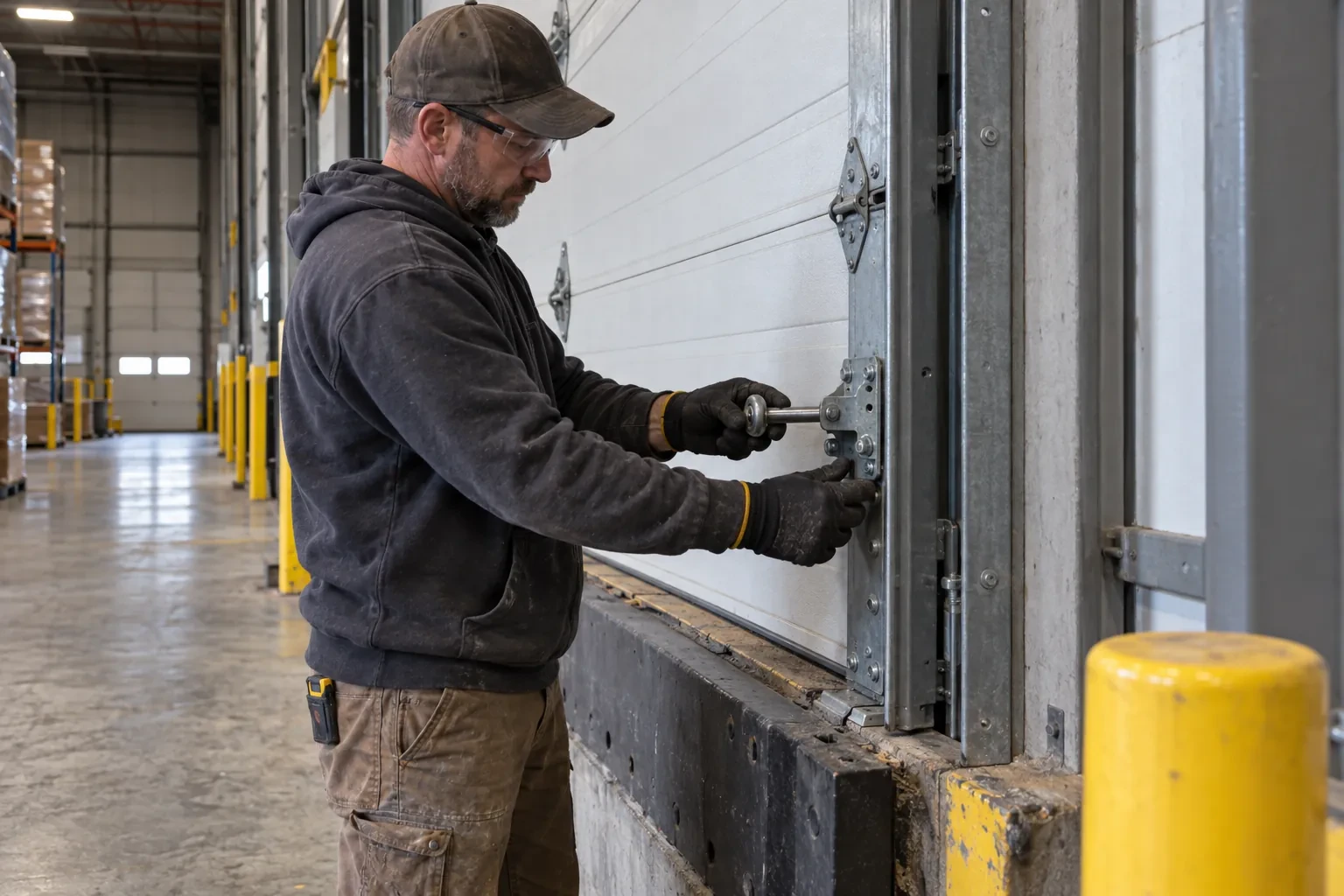
Winter produces a particular version of this call. Slush melts under the door during the day, freezes overnight and glues the bottom seal to the slab. In the morning the opener pulls against a door that will not lift, the cables go slack and slip off their drums, and when the ice finally releases the door lurches up crooked and jams. The reset restores the cables to their drums, rewinds the springs, seats the rollers and trues the track. It also comes with practical advice on keeping the threshold clear of ice so the same morning does not happen again in February.
Cables, drums and the shape of the drop
Both lifting cables are traced from the bottom brackets up to their drums. The technician looks for a cable hanging in a loop, wound crossed on its drum, frayed near the bottom bracket where salt collects, or missing altogether. The drums are checked for set screws that have slipped on the shaft. If one side of the door sits lower, the cable on that side is nearly always the reason, and the springs will have to be handled before the door can be levelled. Finding this early keeps the reset from becoming a series of surprises once the rollers are back in.
Straightening and re-plumbing the track
Alignment work turns a reset into a lasting one. Each vertical track is set plumb and spaced so the rollers are held in the rail with a small clearance to the door edge rather than pinched or loose. Jamb brackets and flag brackets are tightened, and any lag screw that spins in tired wood is moved to sound framing or replaced with a longer fastener or a through-bolt. The horizontal tracks are re-hung level or slightly rising to the rear, square to each other and firmly braced from the ceiling. A kinked or crushed rail is re-formed where the steel allows and replaced where it does not.
A monthly look at the rollers and cables
Once a month, with the door closed, stand inside and look along both tracks with a flashlight. Rollers should turn as the door moves and sit fully inside the rail; a wheel that wobbles, squeals or shows a worn flat is asking to be replaced before it drops out. Both cables should run taut from the bottom brackets to the drums with no fraying near the bottom, where salt and water collect. Hinges and jamb brackets should have no loose or missing screws. This two-minute walk catches almost every off-track event while it is still a small hardware job.